

There are many reasons to choose a high-quality
structural adhesive that can improve the production and performance of Uncrewed Surface Vessels.
ITW Performance Polymers® has a more than thirty-year history of structural bonding in recreational and commercial marine applications and is the leading supplier for structural bonding adhesives for boatbuilders in Europe & North America.
Methyl methacrylate (MMA) structural adhesives are an excellent choice for applications requiring high durability, fatigue & environmental resistance, and the ability to distribute and absorb stress in challenging conditions. They are also the recognized best-in-class structural adhesives for marine applications, along with Devcon® epoxies, metal repair putties for ceramic and metal, and military-approved silicones—delivering the right materials for all your structural bonding and reinforcement needs.
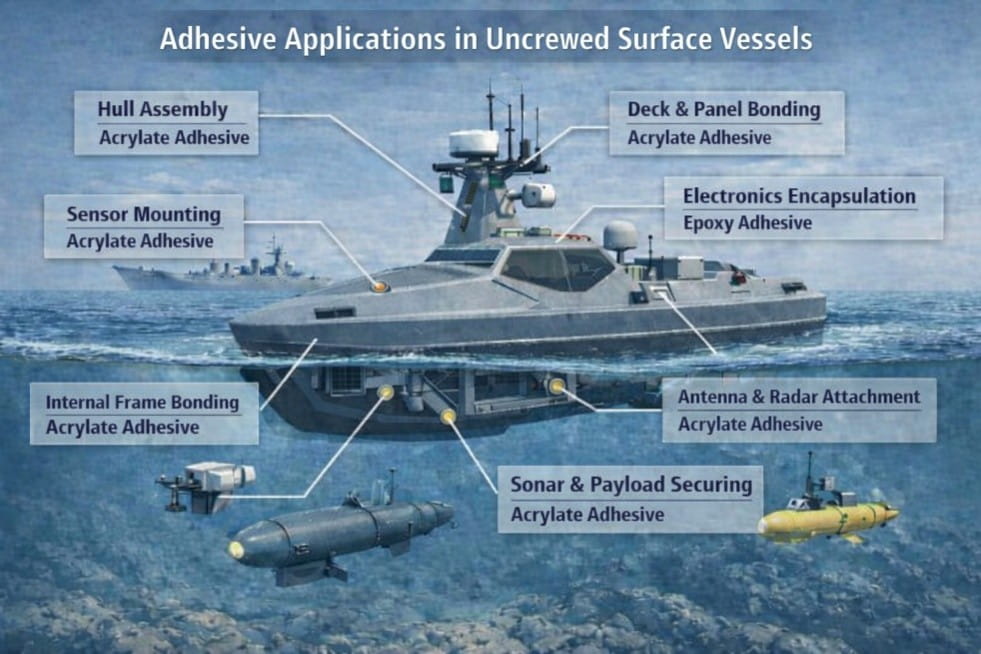
Adhesive Applications in Uncrewed Surface Vessels (USVs)
Uncrewed surface vessels, autonomous underwater vehicles (AUVs), and hybrid semi‑submersibles all depend heavily on structural and functional adhesives to achieve durability, watertight integrity, and long‑term reliability in harsh marine environments. Acrylate adhesives (including MMA‑based) and epoxy adhesives are the dominant chemistries used, each selected for specific mechanical, thermal, and chemical‑resistance requirements.
Structural Hull & Frame Bonding
Methyl methacrylate adhesives are an excellent choice for hull‑to‑hull seams, internal frame bonding, and composite panel assembly. Their high modulus, excellent fatigue resistance, and strong adhesion to fiberglass, carbon fiber and metal substrates make them ideal for the primary load‑bearing structure. In AUVs, where pressure cycling is significant, epoxy bonds maintain dimensional stability and resist creep under continuous hydrostatic load.
Deck, Panel & Fairing Assembly
Acrylate adhesives, especially methyl methacrylate systems, are widely used for deck bonding, fairing attachment, and non‑structural composite panel installation. MMA adhesives tolerate surface contamination better than epoxies, cure rapidly even at lower temperatures, and provide high peel resistance. This makes them suitable for attaching access panels, sensor housings, and modular payload covers that may require field‑level repair or replacement.
Electronics Encapsulation & Waterproofing
Epoxy potting compounds are standard for electronics encapsulation, connector sealing, and cable ingress protection. Their low viscosity and controlled cure profiles allow complete wet‑out of circuit boards and sensor modules. Marine‑grade epoxies also provide chemical resistance to saltwater, fuels, and hydraulic fluids, ensuring long‑term protection of mission‑critical electronics such as navigation processors, IMUs, and acoustic communication modules.
Sensor, Antenna & Payload Mounting
Acrylate adhesives are frequently used for sensor mounting, antenna attachment, and radome bonding. Their flexibility and impact resistance help absorb vibration from wave slamming and propulsion systems. For radar masts, GPS antennas, and optical sensors, acrylates provide strong adhesion to plastics (PC, PMMA, SAN blends), composites, and coated metals without requiring extensive surface preparation.
Underwater Modules & Sonar Systems
Epoxy adhesives dominate sonar transducer bonding, pressure‑housing assembly, and underwater payload integration. Their low water absorption and high compressive strength ensure stable acoustic coupling and structural integrity. In AUVs, structural adhesive is used to bond internal stiffeners, battery trays, and pressure‑resistant bulkheads.
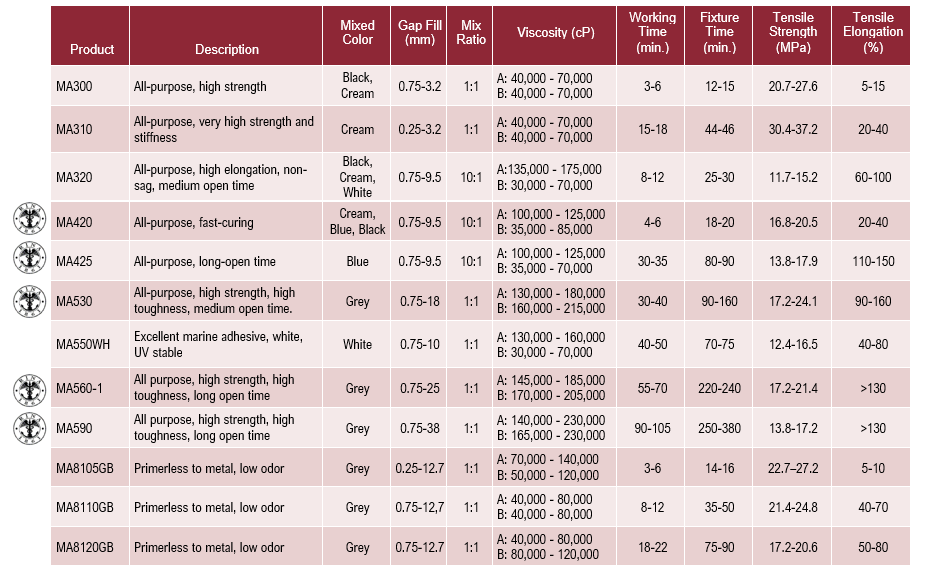
Several Plexus marine adhesives carry RINA marine‑classification approval, confirming their suitability for structural bonding of composite and metallic components in marine environments. While the adhesive itself is not directly certified to DNV, IMO, ISO, MIL‑STD, IEC, or NATO standards, RINA approval provides a recognized third‑party validation that significantly strengthens compliance arguments for uncrewed surface vessel applications. Final conformity with these norms is achieved at the bonded‑structure or vessel level through project‑specific testing and documentation.
Methyl Methacrylate Marine Structural Adhesives
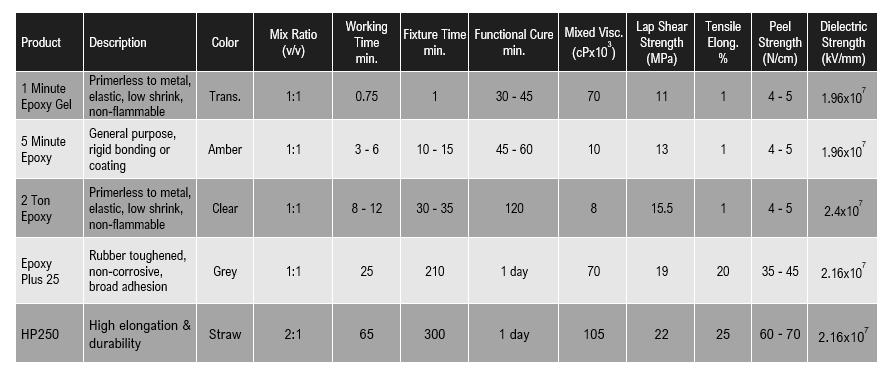
Devcon Epoxy Adhesives
Conclusion
As uncrewed surface vessels become more advanced and mission requirements grow more demanding, the materials used to assemble and protect these platforms must deliver long-term strength, durability, and reliability. Structural adhesives, potting compounds, and specialty repair materials play a critical role in helping manufacturers improve watertight integrity, support lightweight design, protect sensitive electronics, and maintain performance in harsh marine environments.
From hull and frame bonding to payload integration, waterproofing, and sensor mounting, the right adhesive technologies can enhance both manufacturing efficiency and in-service performance. With a broad portfolio of Plexus structural adhesives, Devcon epoxies and repair compounds, and military-approved silicones, ITW Performance Polymers offers proven solutions for the evolving needs of uncrewed marine platforms.
To learn more about adhesive and reinforcement solutions for uncrewed surface vessels and related marine applications, visit ITW Performance Polymers and explore the full range of products designed to support durability, structural integrity, and long-term operational success.
By: Krys Wesselink, Product Manager EMEA
View all our Technical Data Sheets and Safety Data Sheets. Need some help? Ask a technical question and find a solution!
For more information like this, follow ITW Performance Polymers on LinkedIn and sign up for enewsletter in our website footer.