

Why Conveyor Belt Repair is Mission Critical in Heavy Industry
In virtually every heavy industry – from mining and manufacturing to logistics and food processing – conveyor belts are the silent workhorses that keep operations flowing. But when a belt breaks down, everything can come to a standstill, costing valuable time and money. That’s why conveyor belt repair isn’t just routine maintenance – it’s mission-critical.
Downtime isn’t just inconvenient, it’s expensive. With proactive maintenance, early issue detection, and the right repair tools like Devcon belt repair products, you can keep your conveyor systems moving and your operations on track. In this post, we’ll cover how to identify common belt issues, proper conveyor belt maintenance, and how to prevent future breakdowns with belt rip adhesive.
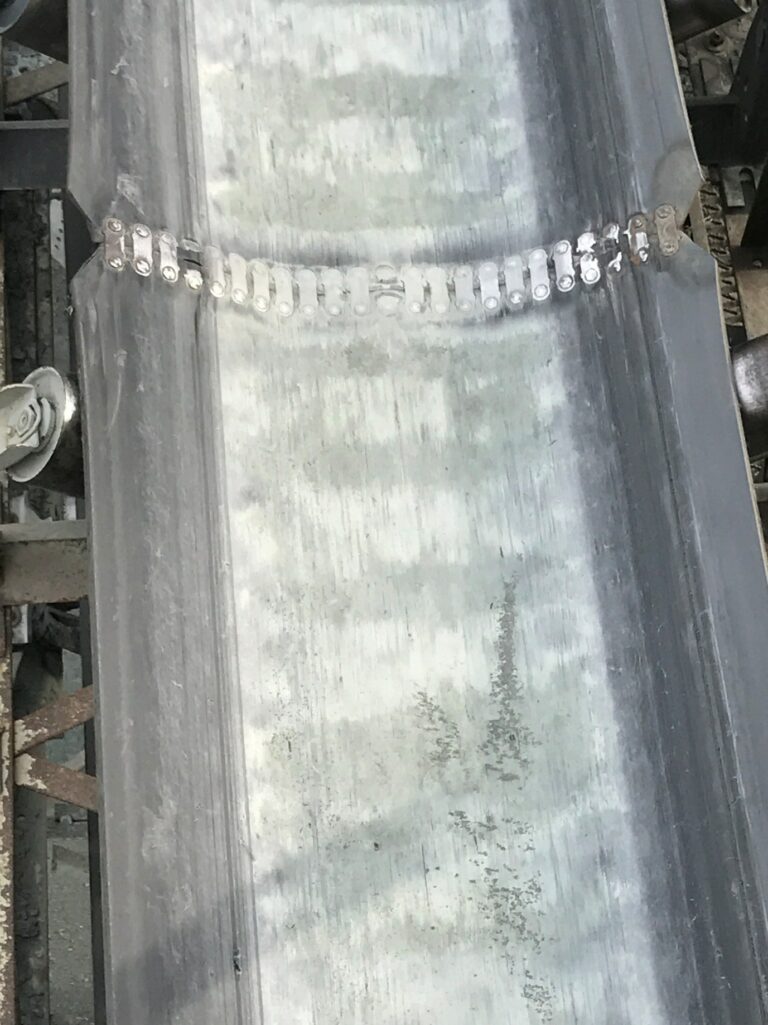
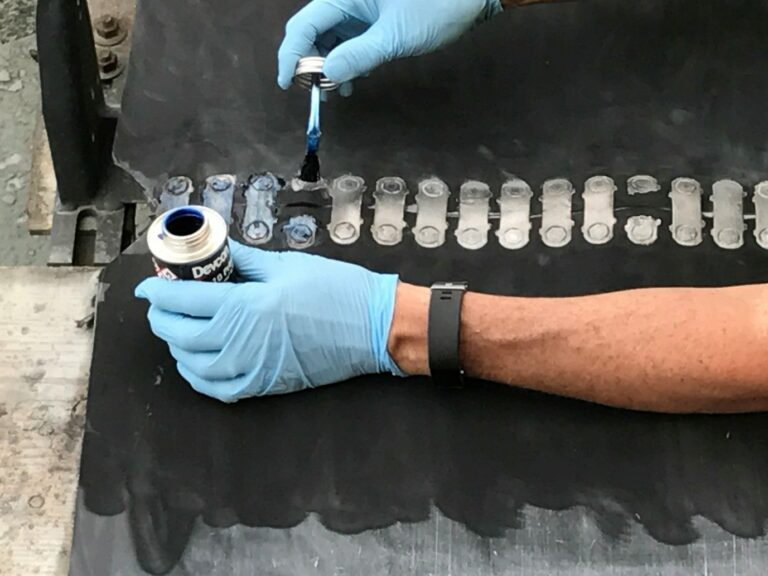
Looking for Signs of Wear and Tear
To repair effectively, you first need to spot common early warning signs regardless of their age. Rubber belts are designed to endure even the harshest environments, but over time they may show signs of wear such as small holes or tears. While minor damage such as a small hole and/or tear is often repairable, even a small hole can turn into a longitudinal tear, potentially splitting the belt or compromising the structural integrity of the belt. To prevent belt splicing and situations like this, routine inspections or automatic inspection systems are recommended to early detect such defects. Early detection gives your team the ability to repair before they become a bigger problem, or the belt needs to be completely replaced. Early detections provide your team with the option to use a tear-resistant adhesive or flexible epoxy to prevent costly damage.
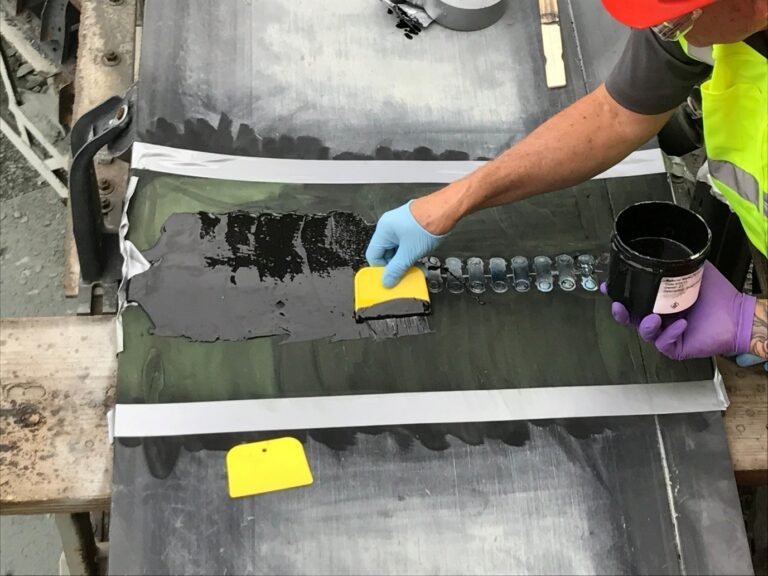
Conveyor Solutions: How to Select the Best Repair Method:
There are three primary types of belt repair methods considered high grade, industrial conveyor solutions, each offering quality solutions depending on the nature and severity of the Damage. However, not every method is suitable for all types of repairs.
- Hot Vulcanization: Best for critical repairs
- This method involves applying heat and pressure to “weld” the belt back together, restoring its structural integrity.
- It is ideal for situations where the belt has suffered significant damage or lost partial integrity.
- Although as a Pro, it provides a high durable and strong bond, but as a con, it requires more downtime and specialized equipment.
- Mechanical Fasteners: Best for emergency or quick field repairs
- Mechanical fasteners such as staples or plate connectors allow for a rapid reconnection for torn belts.
- These are reliable, but short-term solutions, especially in remote or time sensitive situations.
- A downside of the fasteners is that they may cause damage to the scrapers in the end of the belt.
- Mitigation to this is to use a tear resistant polyurethane coating like Devcon® R-Flex® to protect both scrapers and fasteners against wear.
- Cold Vulcanization (Chemical Repair): Best for minor punctures, gouges, or surface repairs.
- This uses tear resistant chemically bonding compounds, typically polyurethane based to seal and reinforce damaged areas.
- Devcon R-flex is a prime example, curing in only 90 minutes while providing excellent adhesion even to difficult to bond rubbers such as SBR Rubber.
- Pros to this include quick cure times, reduced downtime, strong, flexible and durable repairs.
SBR (Styrene-Butadiene Rubber) and Devcon R-Flex: A Superior Conveyor Belt Repair System
SBR is a widely used synthetic rubber in conveyor belt manufacturing, valued for its excellent durability, wear resistance, and cost effectiveness. Its performance characteristics make it ideal for demanding environments across industries such as mining, petrochemicals, and manufacturing. The following make SBR the preferred choice for conveyor systems:
- Excellent resistance to wear and abrasion
- It is particularly favoured in environments where moderate resistance to oil, heat, and abrasion is required.
- Versatility, high impact tolerance and ability to handle heavy loads
- Performs well in both dry and slightly wet conditions
Devcon rubber repair with Devcon R-Flex
Devcon R-flex is a high-performance two-part Polyurethane based compound (sometimes confused with a flexible epoxy) specifically engineered for conveyor belt repair and maintaining rubber conveyor belts, especially those made from SBR.
Key Feature of Devcon R-Flex;
- Strong, flexible bond: Unlike ridged fastener materials, it stretches and moves with the belt, preventing cracking and delamination.
- Abrasion and wear resistance: Extends the life of repaired sections under continuous friction and load.
- Rapid cure time: Cures in just 90 minutes, restoring operational efficiency significantly reducing system downtimes.
- Easy Application: Its small portable kits makes it ideal for onsite or remote field repairs.
- Excellent adhesion: Bonds well to various rubber materials, especially hard to stick to rubber like SBR, providing long term reliability.
Ideal For:
- Cuts, tears, and holes in rubber belts
- Surface restoration of worn conveyor sections
- Harsh industrial environments with temperature fluctuations and heavy impacts
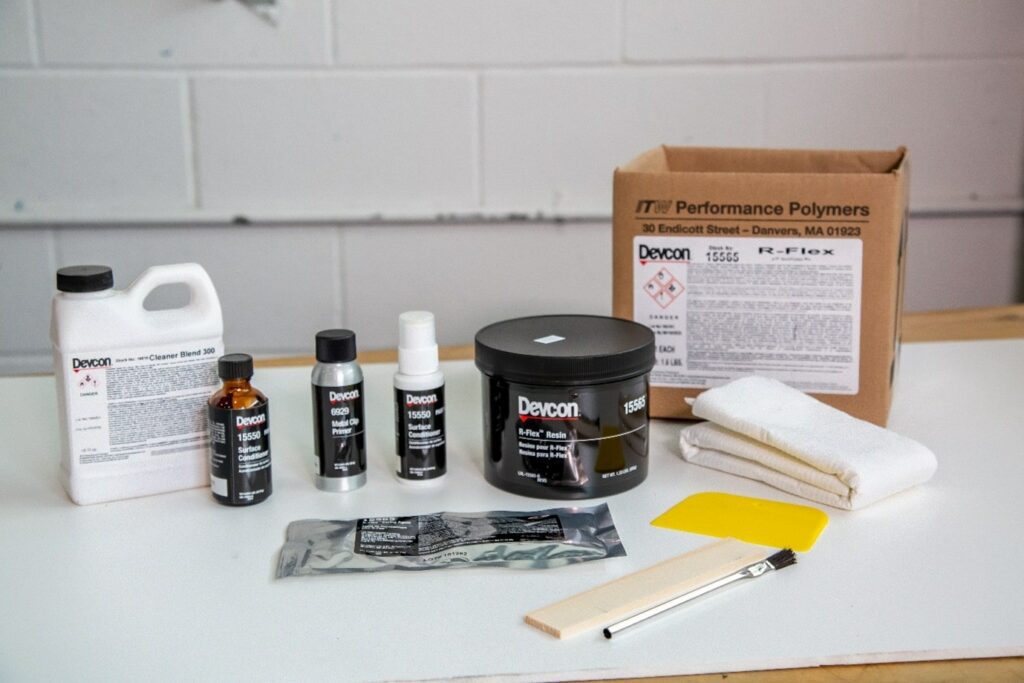
Why Chose Devcon R-Flex?
Devcon R-Flex is more than a quick fix. It is an essential tool for proactive and reactive belt maintenance strategies. So, when it comes to conveyor belt repair, preparation and the right product can make all the difference. Devcon R-Flex is the leading solution for fast, reliable, and long-lasting repairs. It’s more than just a belt repair system, it’s a key part of a proactive conveyor belt maintenance system. Whether addressing minor tears or significant belt damage, it delivers fast, safe and lasting results. Its ease of use makes Devcon R-flex a go-to industrial conveyor repair solution for industry experts worldwide.
By: Gabriel Oliveira dos Ouros, Technical Service Engineer and Aoibhinn O’Sullivan, Technical Service Lab Technician
View all our Technical Data Sheets and Safety Data Sheets. Need some help? Ask a technical question and find a solution!
Further reading: Durability With Devcon® Protective Coatings: Proven In Multiple Industries and The Top Four Types Of Wear Impacting Industrial Equipment.
For more stories like this, follow ITW Performance Polymers on LinkedIn and sign up for enewsletter in our website footer.