

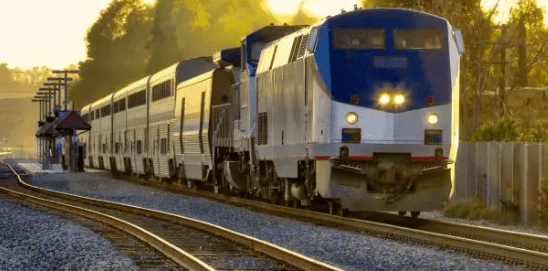
Epoxy adhesives are widely used in the rail industry due to their exceptional bonding strength, durability, and versatility. These durable adhesive solutions support a wide range of applications, from structural bonding for rail car components to maintenance, general repairs, and transportation safety enhancements. Below, we explore the key uses of epoxy adhesives and acrylic adhesives in rail car manufacturing, other infrastructure applications, and their benefits.
Structural Bonding for Rail
A primary application of epoxy adhesives in the rail industry is structural bonding for rail systems. These industrial adhesives are used to securely join components of rail vehicles, including the chassis, floor panels, supports, body panels, and interior fittings. They also provide reliable waterproofing and sealing for floor-to-sidewall assemblies.
Thanks to their high strength, durability, and temperature resistance, epoxy adhesives ensure bonded components withstand the stress of daily operation. This is especially critical for high-speed trains and heavy-duty locomotives, where rail transport durability and reliability are essential for both crash safety (which is why crash safety adhesives are used) and performance.
The Devcon and Plexus epoxy and acrylic families of adhesive ranges offer high-elongation formulas (up to 25%), ideal for applications involving dissimilar substrates and lightweight rail materials like carbon fiber reinforced polymers (CFRP). These impact-resistant adhesives maintain structural integrity and surface aesthetics, even under extreme conditions.
Trackside Applications
Epoxy rail adhesives are also vital in trackside infrastructure. They are commonly used to repair and secure fasteners that anchor rails—an application critical to transportation safety. Additionally, epoxies bond sensors, electronic components, heating and cooling lines, functioning as both structural adhesives and electrically resistant potting and encapsulation materials. Their high strength also supports anchoring parts exposed to mechanical and environmental stresses.
Composite Part Assembly
As modern rail vehicle construction evolves, the use of lightweight rail materials increases to enhance energy efficiency and performance. Epoxy industrial adhesives are indispensable in assembling composite components such as doors, panels, and structural sections. These durable adhesive solutions offer reliable bonds that withstand dynamic loads, vibrations, and harsh weather, while being compatible with a wide range of substrates—including metals, plastics, and composites.
Interior and Exterior Sealing
Inside and outside the train, epoxy adhesives are used to bond and level floor panels. This contributes to passenger safety and comfort while ensuring resistance to water, spills, cleaning agents, and mechanical fatigue. These durable adhesive solutions are essential for maintaining wagon performance across all environmental conditions.
Maintenance and Repairs
Epoxy adhesives play an important role in rail maintenance and repairs. They are used to fill cracks, restore damaged parts, and reinforce worn structures. With fast-curing options and strong adhesion, they minimize downtime and ensure continuous operation. Their versatility makes them effective for both minor repairs and major structural reinforcements in the rail sector.
Conclusion
Rail adhesives provide comprehensive bonding solutions across structural components, composite panels and fasteners, and maintenance applications. From impact-resistant adhesives and crash safety adhesives to Devcon epoxy and Plexus acrylic adhesives for challenging material interfaces, these technologies support the evolving needs of modern rail systems. As the demand for transportation safety, efficiency, and rail transport durability continues to grow, epoxy adhesives will remain at the forefront of innovation in durable adhesive solutions for the rail industry.
By: Kry Wesselink, Product Manager EMEA and Sarah Vigue, Marketing Specialist
View all our Technical Data Sheets and Safety Data Sheets. Need some help? Ask a technical question and find a solution!
Further reading: Thixotropy, Viscosity and Rheology … Oh my!, What is fixture time anyway?, and Is it strong enough?.
For more stories like this, follow ITW Performance Polymers on LinkedIn and sign up for enewsletter in our website footer.