

Post Takeaways
Successful epoxy grout installations in hot weather require more than understanding material behavior, they demand disciplined installation practices. By controlling placement, managing air removal, and protecting material temperatures and cure conditions, installers can overcome summer grouting challenges and achieve reliable, long‑term performance with Chockfast epoxy grouts and chocks.
Part 2 of 2 – Key Considerations for Successful Warm‑Weather Installations
In Part 1 of this series, we explored how elevated temperatures above 85°F (29°C) affect the working and physical properties of Chockfast® epoxy grouts and chocks, including reduced epoxy working time, accelerated cure, and increased exothermic reaction. These effects define many of the summer grouting challenges encountered during a hot weather epoxy application.
Understanding how Chockfast performs in high temperatures is the foundation. In this second article, we focus on Chockfast best practices for warm climates, outlining proven installation considerations that help installers maintain control, reliability, and long‑term performance when working with heat‑resistant grout systems in demanding industrial environments.
Why Installation Practices Matter More in Hot Weather
Epoxy grouting systems are process‑driven by design. While industrial epoxy for extreme heat applications such as Chockfast are engineered to perform under severe service conditions, high temperatures compress installation timelines and reduce tolerance for inefficiencies.
In warm‑weather conditions:
- Epoxy working time in heat is significantly reduced
- Cure reactions accelerate
- Small delays or missteps can quickly lead to defects
For this reason, preventing epoxy curing issues in hot weather depends heavily on preparation, coordination, and disciplined execution at every stage of the installation.
Key #1: Plan for Controlled, Efficient Material Placement
Effective placement is the foundation of every successful epoxy grout or chock installation, but hot weather epoxy application conditions demand additional planning and control.
Warm‑Weather Placement Considerations
- Avoid stop‑and‑start pours. Reduced working time leaves little margin once placement begins.
- Maintain single‑direction pouring. Pouring from one side promotes consistent flow and helps advancing epoxy push air ahead of it.
- Use properly designed head boxes and overpours. Adequate head pressure is especially critical in high‑temp structural bonding applications.
- Stage materials, tools, and people before mixing. In hot weather, placement should begin immediately after mixing to maximize available working time.
Epoxy grout is a structural component, not a filler. Incomplete placement beneath baseplates or soleplates can compromise effective load transfer beneath equipment, regardless of whether the grout itself is classified as a heat‑resistant grout.
Protect Foundations and Substrates from Direct Sunlight
Direct sunlight can significantly elevate foundation and baseplate temperatures well beyond ambient air conditions. Heat‑soaked substrates reduce epoxy working time in heat and may accelerate cure before placement is complete.
To maintain control during installation:
- Shade foundations, baseplates, and soleplates whenever possible, particularly during peak sunlight hours, as shown in Figure 1
- Avoid placing epoxy on surfaces that have been exposed to prolonged direct sun without adequate cooling
- Verify substrate temperatures are within acceptable ranges prior to mixing
These steps are especially important when installing heavy equipment foundation adhesives, where full bearing contact and controlled flow are essential for long‑term reliability.

Key #2: Manage Air Removal as Placement Speeds Increase
Air entrapment is a common cause of long‑term performance issues, and warm‑weather conditions can increase the risk as placement accelerates.
Air Management Best Practices in Hot Weather
- Pour from a single location. This allows advancing epoxy to consistently push air ahead of it.
- Provide clear vent paths. Proper venting is critical for baseplates and soleplates that can trap air. See Figure 2 for an example of this.
- Maintain steady placement pressure. Rapid flow combined with inadequate venting can seal off air pockets prematurely.
- Avoid late‑stage correction attempts. Once the epoxy begins to thicken, intervention may introduce voids rather than remove them.
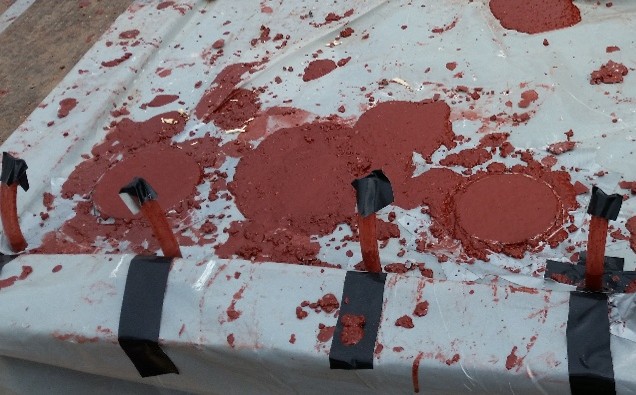
Even small voids reduce effective bearing area, as measured in ASTM testing standards, and can lead to vibration, stress concentrations, and alignment instability—particularly in rotating equipment supported by industrial epoxy for extreme heat applications.
Key #3: Protect the Cure Process in High Temperatures
Curing is where epoxy grouts develop their designed mechanical properties. In hot weather, cure progresses faster but faster does not mean complete or ready for service.
How Heat Affects Epoxy Cure
- Cure occurs rapidly, but early hardness does not indicate full strength
- Higher peak exothermic reaction increases internal thermal stress
- Premature vibration, alignment, or loading can permanently affect performance
Best Practices for Warm‑Weather Cure Control
- Monitor material, substrate, and ambient temperatures. Substrate temperatures often exceed ambient conditions, accelerating cure further.
- Do not align, torque, or operate equipment too early. Cure time is a critical part of the installation—not downtime.
- Protect the installation area from vibration and external disturbances during cure.
- Follow manufacturer‑recommended cure schedules, rather than relying on visual appearance alone.
Proper cure control is essential for high‑temp structural bonding and heavy equipment foundation adhesives, where dimensional stability and long‑term load transfer are non‑negotiable.
Pre‑Condition Epoxy Materials for Optimal Installation Temperatures
Material temperature plays a critical role in hot weather epoxy application performance. Storing epoxy components at elevated temperatures can significantly reduce working time and increase the risk of premature reaction during mixing.
For best results:
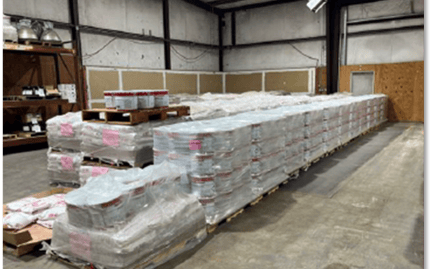
- Pre‑condition epoxy materials to an optimal temperature range of 70–80°F (21–27°C) at least 24 hours prior to installation
- Store materials in a temperature‑controlled area, protected from direct sunlight, as seen in Figure 3
- Remove materials only immediately before mixing, once the installation area and crew are fully prepared
Proper pre‑conditioning helps installers better control epoxy working time in heat, supports consistent flow, and reduces the likelihood of installation disruptions, key factors in preventing epoxy curing issues during summer grouting challenges.
Putting It All Together: Chockfast Best Practices for Warm Climates
High temperatures do not prevent successful epoxy grout installations, but they do demand greater discipline and process control.
By focusing on:
- Efficient, uninterrupted placement
- Effective air removal
- Material and cure control in high‑temperature conditions
installers can successfully manage summer grouting challenges and apply Chockfast best practices for warm climates, even during demanding hot weather epoxy applications.
Final Takeaway
Working with Chockfast in high temperatures requires more than understanding material behavior—it requires adapting installation practices to match accelerated conditions. By combining the insights from Part 1 with the warm‑weather installation strategies outlined here, installers can confidently use heat‑resistant grout systems in industrial epoxy for extreme heat environments and achieve consistent, long‑term equipment performance.
By: Christopher Matthews-Ewald, Senior Applications Engineer
View all our Technical Data Sheets and Safety Data Sheets. Need some help? Ask a technical question and find a solution!
Further reading: Cheat Sheet: Chockfast® Epoxy Grout Typical Installation Steps and Critical Machinery Installation In Cold Weather? Find Out How To Plan For Success.
For more stories like this, follow ITW Performance Polymers on LinkedIn and sign up for enewsletter in our website footer.